





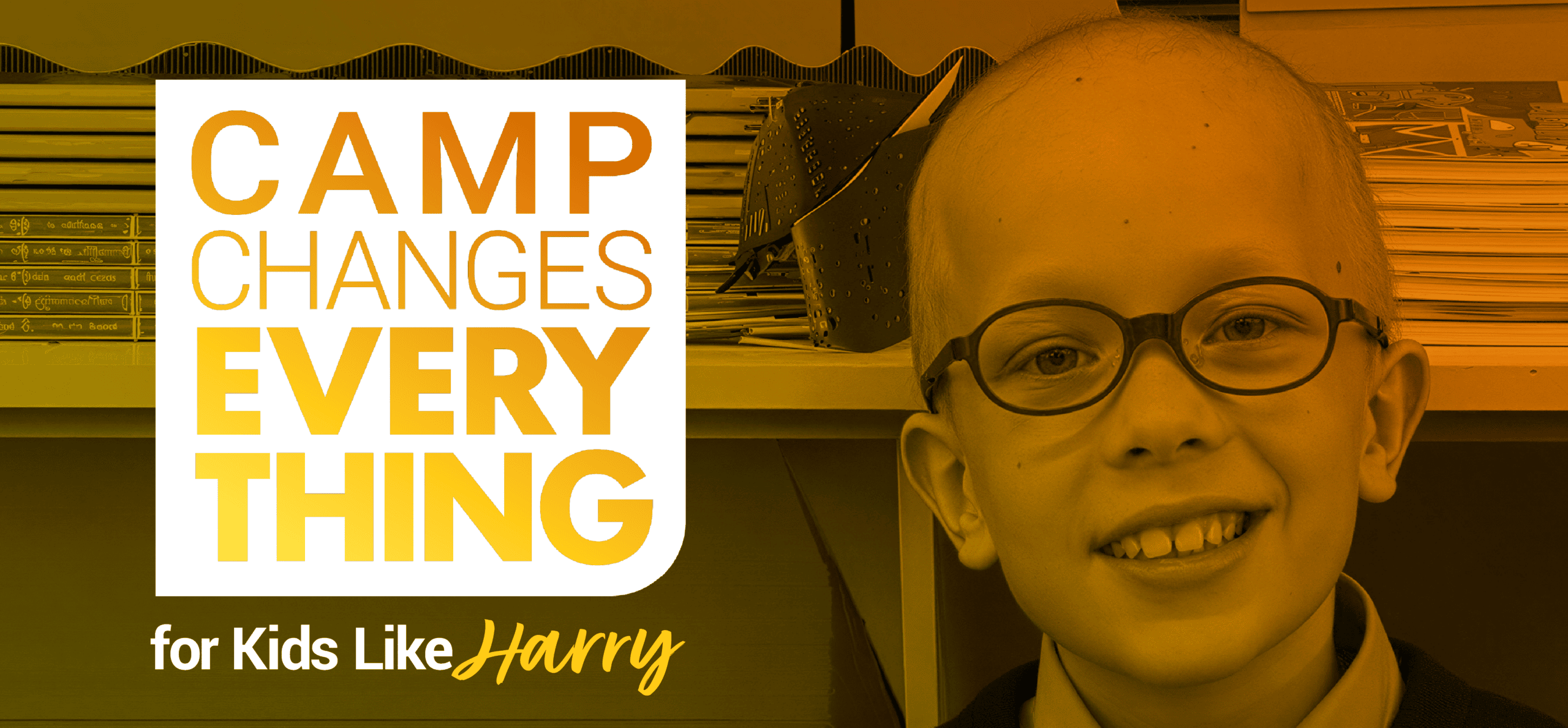
For a child like Harry, living with cancer, camp became more than a place to try new things. It became a place where he could take part, connect with other kids, and know that he belonged.
When Childhood Changes Overnight
Harry was six years old when his family learned that he had a brain tumor and would need nearly two years of cancer treatment.
Before his diagnosis, Harry was an active little boy. His family of five did things together, went on trips, and enjoyed an ordinary family life.
Then came the news that Harry would need 85 weeks of treatment.
“He started chemo when he was six and he didn’t finish till he was eight,” his mom, Doireann, recalls. “Two years in a child’s life is massive.”
Treatment changed everyday life. Harry became very weak from medication and chemotherapy and, for a time, used a wheelchair because he could no longer walk long distances.
His world had become smaller. Activities that had once been part of his childhood were suddenly harder to access, and he had fewer opportunities to take part alongside other children.
Finding a Community Who Understood
At Barretstown, our SeriousFun camp in Ireland for children living with serious medical conditions, Harry found a community where serious illness was understood. Harry found a community where serious illness was understood.
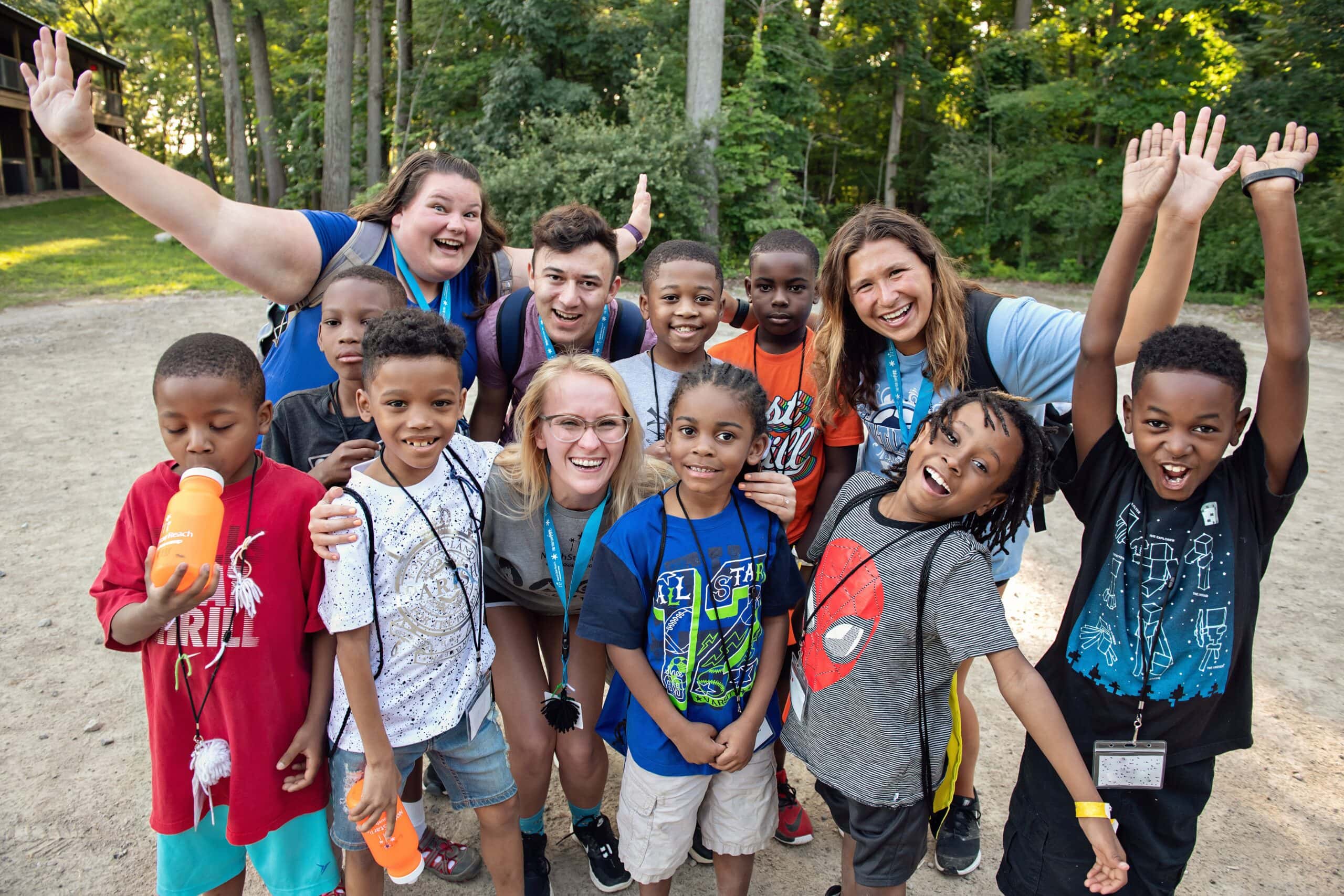
Experienced medical professionals and camp staff could support Harry’s needs. He also met other children and families who understood what it was like to have everyday life shaped by medical treatment.
“They understand things you’ve been going through. They understand everything,” Doireann says. “And it’s really nice to share that experience with someone because it takes away the isolation of that and it makes you feel like you’re not alone.”
For Harry, that meant being part of a community where he could take part and belong.
A Camp Built for Every Child to Participate
While Harry was using a wheelchair, some activities weren’t designed in ways that made it easy for him to take part.
At Barretstown, that didn’t mean sitting them out.
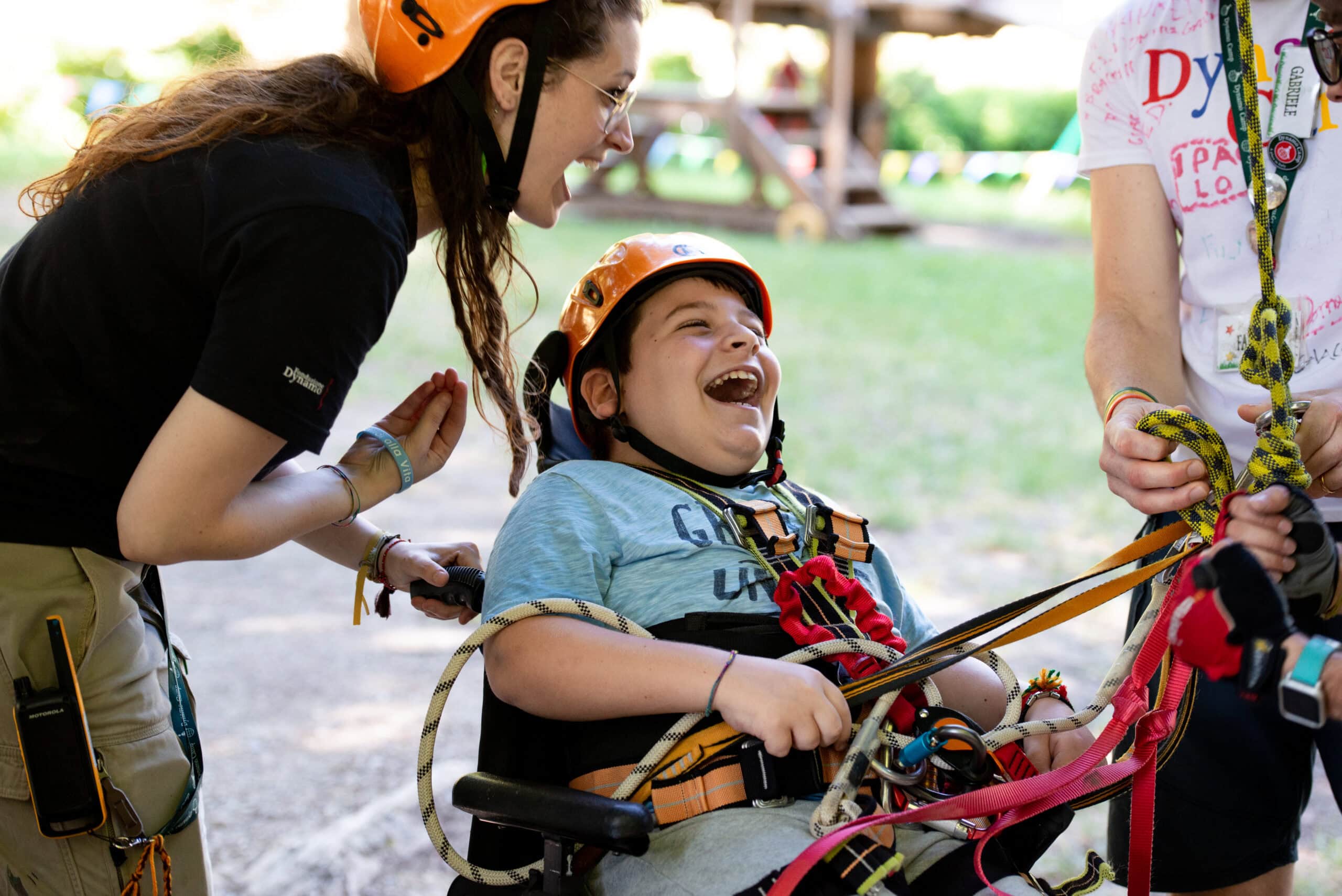
One day, staff asked Harry if he wanted to try the climbing wall. They fitted him with an adapted harness and used a chair lift to help him reach the top.
“He felt like he was a king,” Doireann remembers.
Climbing that wall, Harry could take part in something he wanted to try, with a community around him making sure he was fully included.
Camp staff adapt activities so campers can participate alongside one another—creating a place where differences don’t mean missing out.
A Place to Take Part and Belong
At Barretstown, Harry could choose activities, try new things, spend time with other children, and experience the simple joy of being included.
For a child whose life had been shaped by months of intensive treatment, those opportunities mattered. But so did the people he experienced them with: people who understood what he was going through and made space for him to participate fully.
For Harry, camp changed more than what he could do. It changed who he could do it with.
Because sometimes, what changes everything is finding a place where you can take part—and know that you belong.