




Living With Alternating Hemiplegia of Childhood
For Alice, finding places where she could participate fully hasn’t always been easy.
She lives with alternating hemiplegia of childhood (AHC), a rare neurological condition that can cause unpredictable episodes of partial or complete paralysis. During these episodes, she may temporarily lose the ability to move, speak, or feed herself while remaining fully conscious.
Because stress and fatigue can trigger these episodes, finding a camp that could safely support her medical needs—and give her the chance to participate independently—had long felt out of reach.
For her mother, Catherine, the thought of sending Alice away independently was a big step. Then they discovered L’ENVOL, our SeriousFun camp in France.
After attending a family weekend together, Catherine experienced something she hadn’t expected: confidence that Alice could safely experience camp on her own.
“We were won over by everyone’s energy and big hearts,” she said. “So much so that Alice asks me every day to sign her up for a week without her parents this summer.”
How Camp Helped Alice Discover Greater Independence
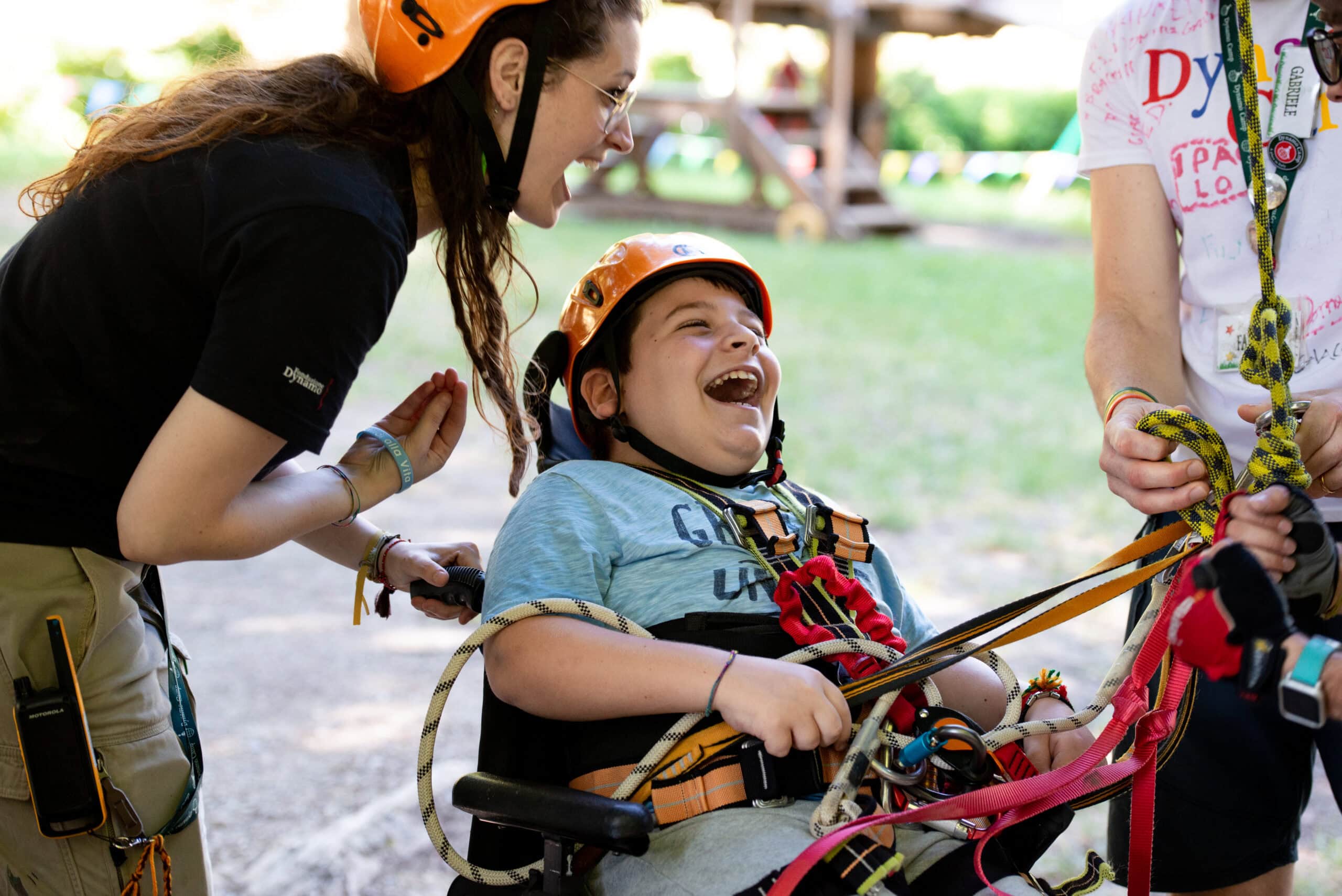
One summer, Alice was able to do just that as she attended camp independently for the very first time. She arrived while still recovering from a paralysis episode that had begun the previous week and, during camp, experienced additional episodes that required support with mobility, eating, and daily activities.
But surrounded by experienced medical professionals, counselors, and volunteers, she was able to participate enthusiastically in nearly every activity, game, and evening program.
She experienced the freedom to try new things, make choices, and participate fully alongside her peers. With the support she needed already in place, Alice was able to make friends and take part in the full rhythm of camp life.
“Her determination, kindness, and joy left a lasting impression on everyone around her,” said Charline, a member of the L’ENVOL staff.
How Camp Created Possibility
For Catherine, the experience transformed more than a single week.
Watching Alice thrive gave Catherine reassurance that her daughter could safely explore new experiences with people who understood her medical needs and recognized her strengths, interests, and individuality—not just her diagnosis.
“She came back absolutely delighted and happy!” Catherine said.
Camp didn’t change Alice’s condition. It changed what became possible when the environment was designed to include her.
Frequently Asked Questions About Alternating Hemiplegia of Childhood and Camp
Q: What is alternating hemiplegia of childhood?
A: Alternating hemiplegia of childhood, or AHC, is a rare neurological disorder characterized by recurring episodes of weakness or paralysis that can affect one or both sides of the body. Episodes can vary greatly in duration and severity and may also affect a person’s ability to move, speak, eat, or perform other everyday activities.
Q: What can trigger an alternating hemiplegia episode?
A: Triggers vary from person to person. Reported triggers can include physical activity, environmental stress, changes in temperature, water exposure, certain foods, and other stimuli. Families often learn to recognize and manage the particular triggers that affect their child.
Q: Can children with alternating hemiplegia of childhood go to camp?
A: Some children living with alternating hemiplegia of childhood may be able to attend programs designed to support their individual medical and accessibility needs. At SeriousFun Children’s Network camps, experienced medical professionals work alongside camp staff to help children living with serious illnesses participate safely in camp activities.
For Alice, that support meant she could attend L’ENVOL independently, even while experiencing episodes that required assistance with mobility, eating, and daily activities.
Q: How does SeriousFun support children with complex medical needs at camp?
A: SeriousFun camps are intentionally designed for children living with serious illnesses and medical conditions. Depending on the camp and program, experienced medical professionals, trained staff, accessible facilities, and individualized support help make activities and everyday camp life possible for children with complex medical needs.
That support can also give parents greater confidence that their child’s needs will be understood while they experience greater independence.
Q: What does independence mean for children living with serious medical conditions?
A: Medical needs can sometimes require children to rely heavily on parents and caregivers or limit opportunities to participate independently. Experiences that allow children to make choices, try new things, and navigate activities with appropriate support can help them discover abilities and strengths they may not have had opportunities to explore before.
For Alice, attending camp on her own became an opportunity to participate fully, make friends, and discover she could do more than she had imagined.